
Cell Plasticity and Tissue remodeling in development and disease
Cell Plasticity and Tissue remodeling in development and disease
Joint ABCD Special Interest
Groups Meeting 2026
Bari, Italy • 18-20 November 2026
Cell Plasticity and Tissue remodeling in development and disease
Dear Friends and Colleagues,
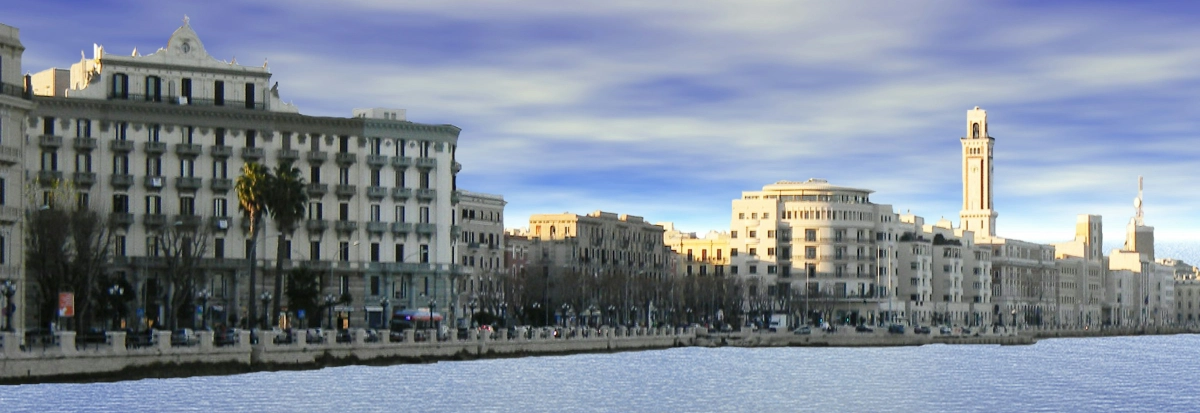
We are delighted to invite you to the Joint ABCD Special Interest Groups Meeting (JASM 2026), which will be held in the city of Bari from November 18th to 20th, 2026.
The conference will be hosted at the Centro Polifunzionale studenti (ex palazzo delle Poste), which is located in the centre of the city.
By bringing together the Special Interest Groups of "Organelle Biogenesis, Signal Transduction and Trafficking" and "Cellular Stress, Stem Cells, Development and Regeneration", JASM 2026 aims to bridge the gap between complementary fields. Our goal is to spark transversal interactions and foster collaborative exchanges among researchers exploring the complexities of cell communication, development, and homeostasis.
We are honored to host a prestigious lineup of keynote speakers who will share their latest insights across a diverse range of cell biology, with particular focus on Cell Plasticity and Tissue remodeling and Cellular Signaling and Membrane Trafficking. With pioneering contributions spanning stem cell biology and early development modeling through advanced 3D systems, signaling pathways, ubiquitin-dependent proteostasis, and epithelial organization, Alfonso Martinez Arias, Silvia Fre, Claudio Joazeiro, and Madelon Maurice will provide a comprehensive and integrated perspective of the mechanisms driving embryogenesis, self-organization, as well as on cell fate and plasticity in health and disease.
True to the ABCD tradition, the heart of this meeting lies with our early-career scientists. Most of the oral presentations will be selected from submitted abstracts, providing Ph.D. students, postdocs, and young researchers, a prominent platform to showcase their work and engage with leaders in the field.
Prizes for the best oral and poster presentations will be awarded during the meeting. Support grants will also be allocated after the meeting to help young participants cover their meeting expenses.
We invite you to explore this website for further details regarding the scientific program, venue logistics, accommodation, and registration.
JASM 2026 promises to be a fantastic opportunity to share fresh ideas and build lasting professional networks. We look forward to welcoming you to Bari!
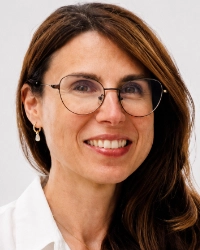
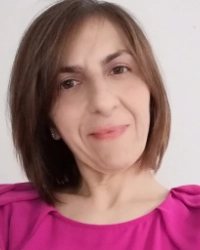
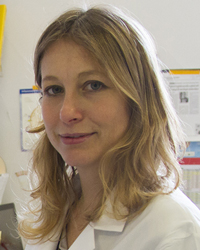





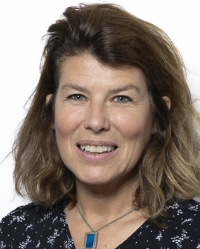
After undergraduate and Master studies at the University of Milan, Italy, where she is from, Silvia Fre obtained her PhD from the Sorbonne University in Paris and worked on Notch signalling in Drosophila during her post-doc in the lab of Spyros Artavanis at Harvard Medical School, Boston. She moved to France in 2005 to tackle the role of Notch in the mouse intestine in the lab of Daniel Louvard and since 2013 she is now senior group leader at Institut Curie, in Paris, where her team studies how epithelial stem cells coordinate fate decisions with morphogenetic events both in development and during tissue regeneration. They use lineage tracing to mark the stem cells and progenitors expressing Notch receptors in vivo in different epithelial tissues (mammary gland, intestine, prostate, salivary gland, lacrimal gland). More specifically in the mammary gland, her lab explores the mechanisms responsible for the switch from multipotency to unipotency that happens in the embryo during branching morphogenesis, as well how adult cell plasticity is controlled. These studies are also aimed at gaining insights into the molecular and cellular mechanisms required for fate reprogramming and tumour initiation.
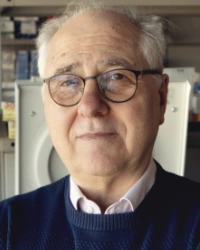
Alfonso Martinez Arias is currently Honorary Research Professor at the Universitat Pompeu Fabra in Barcelona. He obtained a PhD from the University of Chicago (1983) and after a postdoc at the MRC Lab of Molecular Biology in Cambridge (UK) became affiliated with the University of Cambridge as a Wellcome Trust Senior Fellow and, from 2001, as professor of Developmental Mechanick. In 2021 he moved to Barcelona. He is an elected member of the European Molecular Biology Organization and oft the Academia Europea and has received the Waddington medal of the British Society of Developmental Biology. Currently his work is at the interface between stem cell, developmental and systems biology. Alfonso has published over 190 articles in his field and coauthors the classic text book in the field Wolpert’s Principles of Development (OUP). In 2023 he published “The Master Builder’(Basic Books) where he suggests a cell’s eye view of biology from the perspective of development. A second book “Embryo; the science of becoming human’ will be published this Autumn.
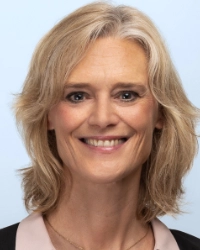
Madelon Maurice is Professor at UMC Utrecht and member of the Oncode Institute. She is internationally recognized for pioneering mechanistic insights into how stem cell– niche communication governs tissue renewal and how oncogenic mutations disrupt these processes. Her laboratory combines molecular biology, advanced imaging, and organoid-based models to dissect cancer-relevant signaling mechanisms and translate these insights into therapeutic concepts. A longstanding focus of her work is ubiquitin-mediated regulation of cell signaling. Key contributions include the discovery that the membrane E3 ligase RNF43 controls WNT receptor turnover in stem cells, and the invention of SureTACs, a platform for targeted degradation of cell-surface proteins through induced proximity to membrane-bound E3 ligases. These discoveries opened new opportunities to target previously inaccessible cell-surface proteins. Maurice has led international networks, including the WntsApp ITN, and directs programmes such as the EIC Pathfinder OutMARCH consortium, bridging signaling biology, organoid technology, protein engineering, and therapeutic innovation. Her work has been recognized by funding from ERC, NWO VICI, the Gravitation programme IMAGINE!, the European Innovation Council, and Cancer Grand Challenges. She is cofounder, shareholder, and Chair of the Scientific Advisory Board of Laigo Bio, which advances SureTACs toward clinical application.
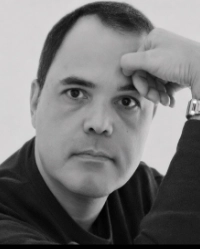
Caudio Joazeiro, Ph.D., is Professor of Molecular Biology at the Center for Molecular Biology, Heidelberg University (ZMBH) and holds a joint appointment at UF Scripps. He studied Biology (BSc) and Biochemistry (MSc) at the Univ. of São Paulo and received his PhD in Biology from the Univ. of California, San Diego. During postdoctoral work at Salk, he found that c-Cbl acts as an E3 ligase for receptor kinases and showed that the RING domain catalyzes ubiquitin transfer, defining a central mechanism in ubiquitin biology.
The Joazeiro lab discovered Ribosome-associated Quality Control (RQC), a pathway that eliminates aberrant nascent chains generated by ribosome stalling and collisions during translation. This finding revealed that proteolytic targeting can begin while nascent chains are still ribosome-bound. His group later identified an ancestral form of RQC in bacteria and also showed that ribosome collisions serve as a translational stress signal across domains of life. His studies further linked defective RQC to neurodegeneration in mice and humans. These discoveries established key principles of translational surveillance and proteostasis in health and disease.
His contributions have been recognized through several awards, including an ERC Advanced Grant for “Surveillance of Translation: From Molecular Mechanisms to Roles in Disease.” He also plays an active role in shaping the ubiquitin and proteostasis fields through the organization of numerous scientific meetings.